Skip to content
Coyote Hunting 101
Menu
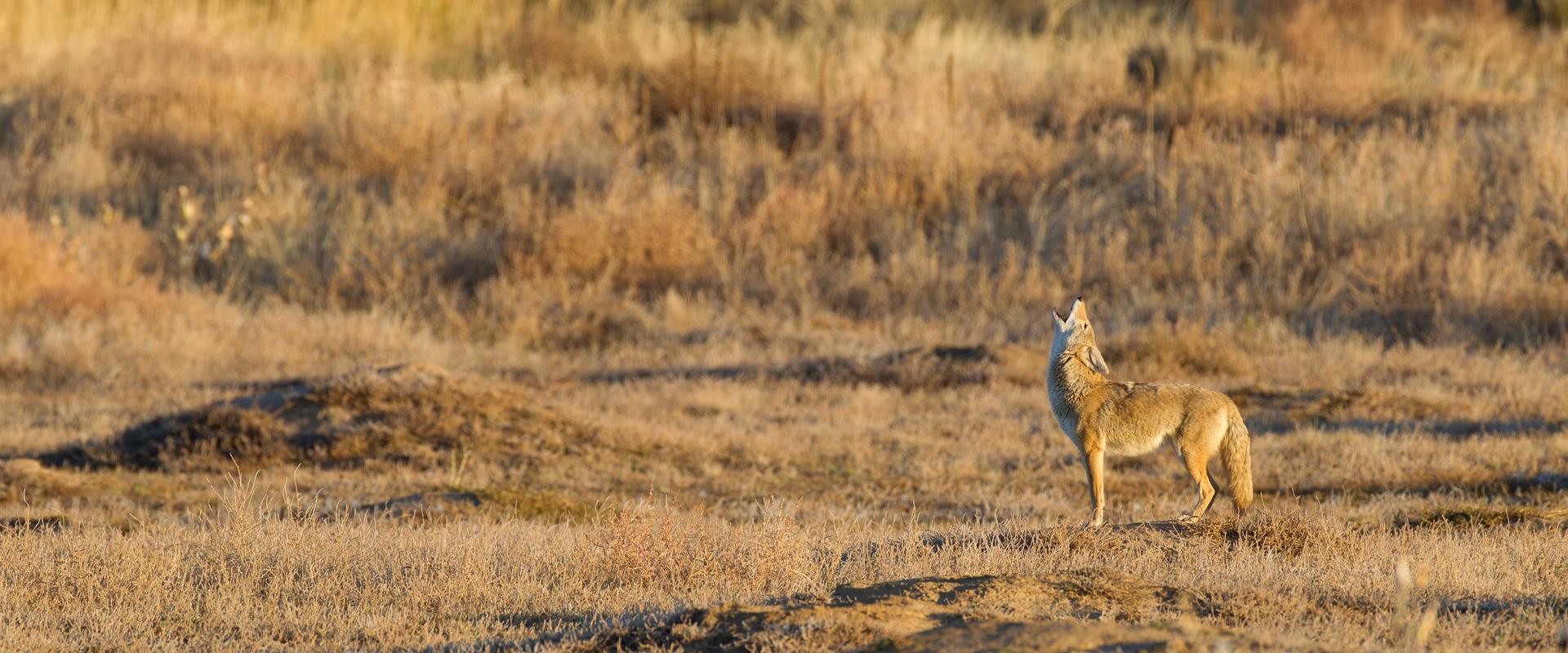
A coyote howling at first light on a low rise of frost-burned grass

A complete course in coyote hunting · Est. 2014

Coyote hunting, learned the hard way: 101 tips from fifteen years in the field.

Everything I know about calling predators, organized so you can actually use it — from your first stand to skinning out. Written by one guy who's done it for a living, not a content team.

The curriculum

Five guides · 18,000 words · free

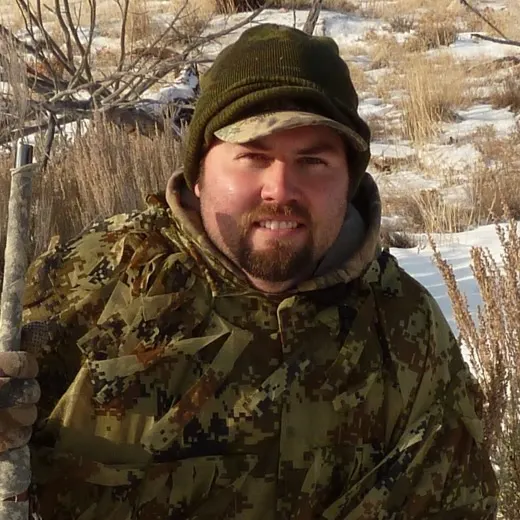
Chad in a camouflage ghillie, kneeling in snow-covered sagebrush with a scoped bolt-action rifle

Who's telling you this

I'm Chad C.. I worked in the predator hunting industry full-time — guiding, testing gear, filming hunts — and I've called coyotes seriously for fifteen years, and chased them since I was a kid. My best day was nine dogs. I've had more goose-egg days than I can count. Both numbers matter.

My story →

How to hunt coyotes

The whole method fits in five steps. Everything else on this site is the detail of one of them.

  1. Find them. You can't kill a coyote where they don't live. Look for tracks and scat, water, cattle and crop edges, and ask politely for private ground. If you're not seeing sign, move on. Part 3 is how I find them.
  2. Pick your day. Early morning first, and a day when the wind is in your favor. From the breeding peak in mid-February, howls start beating distress. Part 5 is when to go.
  3. Get in without being noticed. Hide the truck, walk in with the sun at your back, stay off the skyline, and go quiet for the last two hundred yards. Most stands are lost before the call is ever turned on.
  4. Set the stand. Sit high, in the shade, with the wind checked at the stand and not at the truck. Caller 30 to 40 yards out, decoy within three feet of it, and a round in the chamber before you press play.
  5. Call, read the dog, shoot. Fifteen to twenty minutes a stand. Open with a howl and wait, then go to distress. Don't move. Know where your downwind is and shoot before they reach it; bark to stop a runner. After the shot, sit still, because a second one is often on its way. Part 4 is the stand and the shot.

That is the method. The 101 tips start below and run through all of it in order, or jump straight to the gear.

The best way to hunt coyotes

It really is a pretty simple process, but you must be disciplined. Find the right locations, and don't waste your time in over-hunted places or places with poor habitat. Find the rich spots, and once you do, don't over-hunt them yourself. Put in the time and effort to find the best locations, then go on days when the weather is in your favor. I hate wasting a day in a prime area just because I wasn't patient enough to wait for the right conditions.

If you asked me how to coyote hunt in one word, it would be quietly. Learning to be stealthy in your approach will be your best friend. Once you're in the right location on the right day, being quiet is your greatest companion. I work so hard at this that it's a habit now, and I constantly have to teach my hunting partners the practice of entering a stand in stealth mode.

Hunting coyotes, thirty-five years in

There's nothing like waking up early on a day you're going on a coyote hunt. I can barely get out of bed for work at 7:00 am, but getting up at 5:00 am for a coyote hunt is no problem. I'm sure you share the same passion. I get all of my gear ready the night before, and I pack it using a checklist to make sure I have what I need.

Hunting coyotes can be one of the most rewarding pursuits in your lifetime. It will make you laugh, cry, and scream in frustration. Most of all it will make you lose sleep at night and daydream about predators coming in to the call. This website was designed to help you in your pursuit of becoming a better predator hunter.

On the way to the day's hunting grounds I ponder over my scouting report. I think about where all of my stands will be and how many I think I can get in for the day. When I get near my first stand the sun will be up within a half hour, and it's almost shooting light. I still get butterflies, just like when I was in high school and our team bus pulled into the opposing team's parking lot.

Hunting coyotes is my way of connecting with nature. In this fast-paced, uber-connected world it's good to get out and disconnect for a while. I put away my cell phone unless I'm using it for GPS or calling home. A coyote hunter has to be in tune with the moment — present, focused, and engaged with the elements. As a friend put it after his first hunt with me, "coyote hunting is one of the few things in life where you have to be 100% present in the moment it all goes down."

Predator hunting demands that you know the weather patterns, the temperatures, the ebb and flow. Will there be cloud cover or sunshine, rain or snow, wind or calm? Every detail down to barometric pressure counts as you build a library of hunting knowledge and experience.

As I begin my walk into the stand I observe and absorb everything. The direction of the sun, the flow of the breeze. There's a set of coyote tracks — they appear to be more than a day old. A broken branch off the shrub, a piece of fur hanging on it. Perhaps a chase happened here recently. Moving quietly I take it all in, registering and deciding how I'll approach the stand. I love the thrill of the hunt.

My name is Chad and I've spent several years working exclusively in the predator hunting industry. I worked day in and day out as a coyote hunter, testing varmint hunting equipment and filming lots of high-intensity predator hunts. With all of that time in the field alongside hunting professionals I picked up a lot of expert advice. I took that advice and spent even more time alone perfecting my craft. Although I rarely pull the trigger these days, I do my best to capture coyotes on camera in one form or another.

Over the last thirty-five years, since the fall I first tried to call one and watched my dad kill one, I have tried to find the best way to hunt coyotes. I have failed a lot at it. I still don't consider myself a master, but I consistently call in coyotes and that stands for something. My best day included nine coyotes, and I have had more goose-egg days than I care to count. After trying just about everything I've found some tips and tricks that work for me.

Predator hunting basics

This website was built to cover all of the varmint hunting basics — the kind of questions I constantly get asked. The tips represent my current methods, but those always change as I improve and learn new things. Get on the email list to hear about the new things I'm learning and having success with.

Many of you will have questions about hunting and calling coyotes. Read through all of the tips first, then get in touch. I can't answer everything, but I do my best to respond and to write posts answering the questions that come up most.

Coyote Hunting 101, part by part

I've broken the tips into six parts. Part 1, the safety and law tips and the pre-flight checklist, is on this page. The rest cover the following.

Coyote hunting gear: see what the pros use, and what I like to use on a daily basis. Everything from predator hunting apparel, shooting sticks, bipods, e-calls, mouth calls, decoys, weapons, ammunition, shooting chairs, gloves and face masks. Part 2 covers it.

Scouting for coyotes: too many hunters go out and try to hunt 'em where they ain't. I can tell you from experience that you can't call a coyote if they don't live where you're calling. This section goes over private and public ground, scouting, locating, habitat, and several land features to look for while searching for that perfect spot. Part 3 covers it.

Arriving on hunt location: now that you have your areas picked out, how do you get into your stand without scaring the critters away? I cover sun location, wind direction, movement, skyline, scent and communication. Mastering these techniques will put more fur in the shed.

Making a coyote stand: selecting a stand can be difficult, and a few simple mistakes can make or break your day. I cover elevation, wind, shade, camouflage, setting up your caller, decoy placement and call direction. These steps create good habits that produce better results over the span of a season.

Using electronic calls: you have an electronic call, now what? What sounds do I play? How loud? How long should I call? Can I switch sounds? How long is a typical stand? There are a lot of methods out there — I'll tell you what works for me.

Using mouth calls: learn the difference between an open reed call and a closed reed call. One of my killer techniques involves a simple squeaker, and I tell you how to make it part of every stand. Part 4 covers calling.

Coyote on approach: you've done the hard work — scouting, getting up early, selecting the perfect stand — and now you've got a coyote on the hook and your adrenaline has gone through the roof. The rush is addictive. I talk about movement, coyote body language, watching your downwind, taking a moving shot, barking a coyote to stop, open spaces, and hunting in the thick.

After the shot: hopefully you've killed a coyote. Now what? It's not unrealistic to call another one. Learning to control yourself after the shot will make you a better hunter.

The next stand: now that you've caused a ruckus in one spot, where do you go next? What happens if I have a blank stand? How far should I move down the road? Should I hit the same place over and over? I'll help you decide the best technique for your situation.

Skinning coyotes: a tough and intimidating job the first few times you do it.

When to hunt coyotes: what time of year is best — summer, spring, fall or winter? What about time of day, and moon phase? All of these are worth asking before you make plans for that secret honey hole. Part 5 covers timing.

Night hunting coyotes: this is becoming more popular by the minute, as more people hunt at night rather than spend their days after a primarily nocturnal animal. Learn the basics — stand selection, scanning, light color and much more. Part 6 covers the dark.

Coyote hunting regulations by state: there's a state-by-state guide to predator hunting regulations right here on the site. Look up your own state's information, laws and seasons, every answer cited to the agency's current rulebook. If you find a news story in your state, or want a hunting contest featured, let me know. Start with the regulations index.

The second part of this site focuses on product reviews. I've spent countless hours with almost every imaginable product related to hunting coyotes, and I'll be honest with you and give you the information you need to make the best buying decision. If you have a question about a specific product, contact me and I'll do my best to answer.

Everything on this page so far is a primer. The full 101 tips start below, and they run in order through all six parts of the series. Thanks for stopping by, and good hunting.

This is the primer that built the site. The tips run in order, 1 to 101, across six parts — safety and law, gear, scouting, the stand and the shot, timing, and hunting after dark. Read them straight through or jump to your part.

Part 1 of 6

Part 1: general information

General information

  1. Tip 1: Be safe

    Hunting is a lot of fun, and a great way to make memories with your friends and family. Take every precaution when dealing with firearms and wild animals. Coyotes and other predators are susceptible to disease, so be careful when handling animals and be sure to wear gloves.

    Further reading

  2. Tip 2: Know the law

    Predator hunting regulations vary from state to state. Make sure you are hunting within the laws established by your state and county. Some states allow year round hunts, while others do not. Some require a permit, others do not. Some allow night hunting, others do not. Check your own state regulations and choose to abide by them.

Pre-flight checklist — before you head out

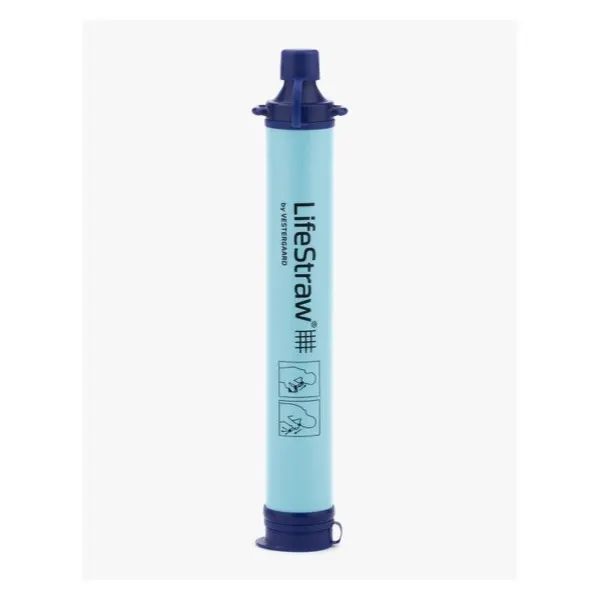
  1. Tip 3: Water

    • The LifeStraw Personal water filter straw
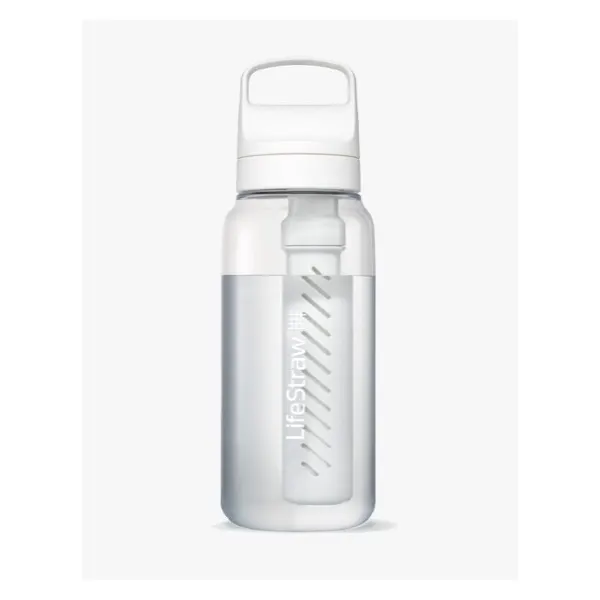
    • The LifeStraw Go filter water bottle

    Always bring lots of water, you never know what could happen, and many times you will be hunting in remote areas. It’s pretty cheap to buy water in bulk, or fill up some jugs and throw them in the truck. I like to buy a large pack of water bottles before every trip just in case that once in a lifetime emergency hits, and I need water!

    Here are two products that I keep with me almost all of the time. The first is the Life Straw. It’s a simple little straw with a filter built in. Just a few facts about it: Removes minimum 99.9999% of waterborne bacteria, and surpasses EPA standards for water filters. I recommend one for around $20.

    This is the Life Straw water bottle version. I keep this thing in my pack for hiking, camping, and of course all of my hunting ventures. It’s even better than the straw if you need to take water with you, rather than just drinking from the source. I’ve never had to use it in an extreme situation, hope I never do. This one runs around $50, and you’ll always see it on my motorcycle pack as well. They are great for any ADV.

  2. Tip 4: Food

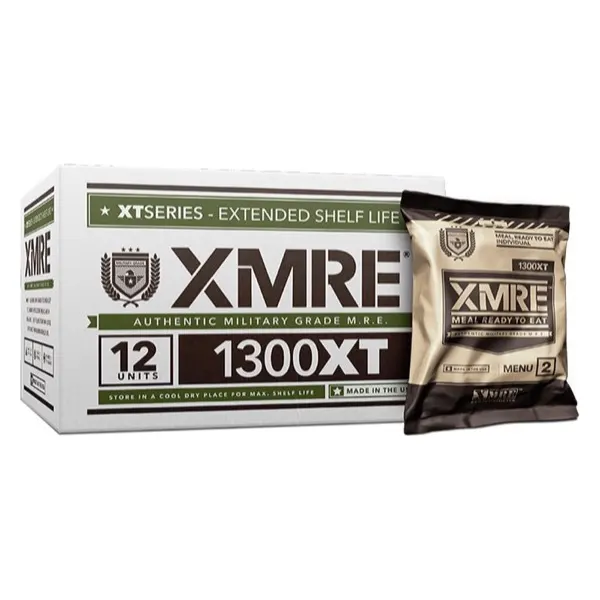
    • A case of XMRE 1300XT meals ready to eat

    Pack extra snacks, especially nuts and seeds. High calorie snacks can keep you alive if something goes wrong. If you are exposed to cold temperatures and moving a lot you’ll be burning more calories than usual, you’ll need to replace that energy with something.

    I’ve added some of my favorite hunting food that I typically pack with me. I really like to take MRE’s because they are so easy to fix. All you need is a little water to heat them up. The one’s I’ve listed taste really good too. Plus it’s like a fun little grab bag with every meal. Buy them in bulk to save yourself a little cost. If you don’t use them, they are great preparation for the zombie apocalypse.

  3. Tip 5: Gas up

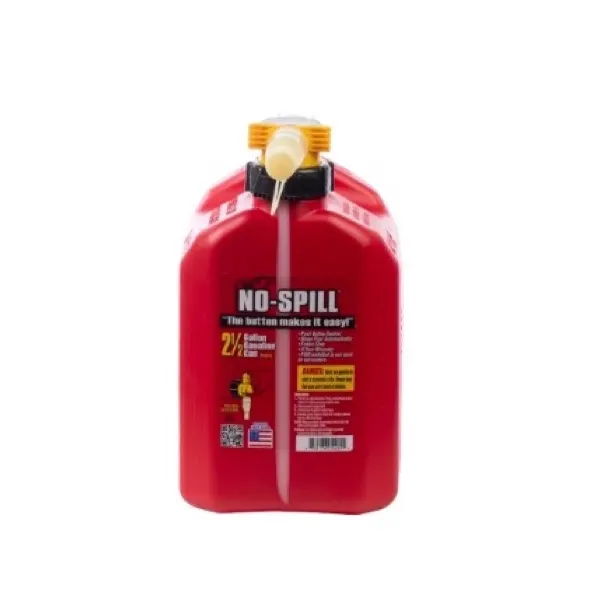
    • The No-Spill 2.5 gallon gas can
    Make sure you have enough to get to your honey hole and back. Know how much fuel your vehicle will accept, and how many miles you get per tank. It's always smart to fill up before you hit the dusty road. I pack a little no-spill extra tank with me, just in case. Don't cut a trip short because you know you won't make it back if you go that extra mile.
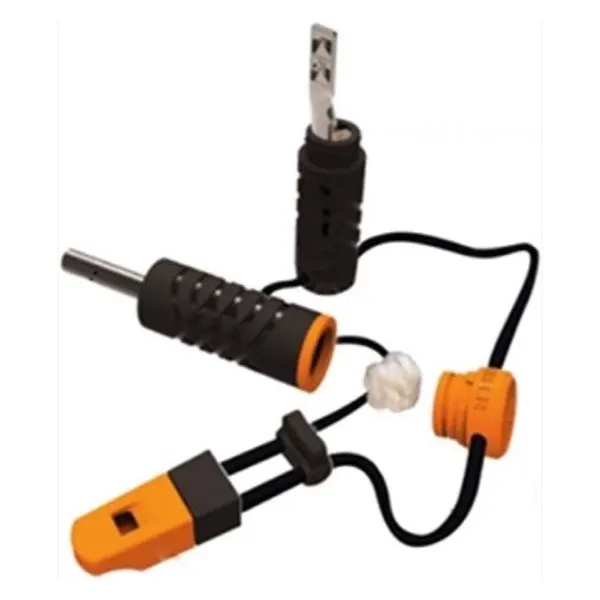
  4. Tip 6: Fire

    • A Gerber ferro rod fire starter
    Put a fire starter and fire starting material in your pack or vehicle. You'll be glad you did that one time something goes wrong. Test your fire starter before you're in that life-and-death situation — don't wait to find out in the woods.
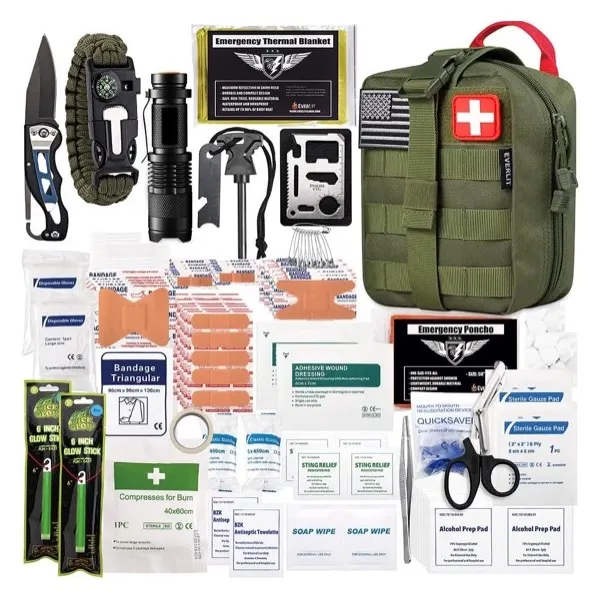
  5. Tip 7: First aid

    • The EVERLIT IFAK first aid kit and its contents laid out

    Anything can happen in the wilderness. Hopefully nothing goes wrong, but it’s nice to have something when, heaven forbid, something does go wrong. I carry a nicer MOLLE first aid kit over the cheap ones at Walmart — it comes stocked, and the pouch straps to a pack. This is another item that tends to find its way into my hiking pack, and on my dirt bike. Plus it’s OD green, not hospital white!

  6. Tip 8: Tell somebody

    Where in the world you’re going! Pull up a Google Map and show someone where you are, and where you plan on hunting. Google Earth is a free download (great for scouting too), and it could save your life if you happen to go missing. I always tell my wife where I will be if I turn up missing.
Continue with the tipsPart 2: Coyote Hunting Gear →
Field notes, by email
A few emails a season. What's working, what broke, what's worth the money.
Get on the list

Your state

Is it legal where you hunt?

Seasons, licenses, night hunting, and e-call rules, verified against each state agency.

All state regulations →