
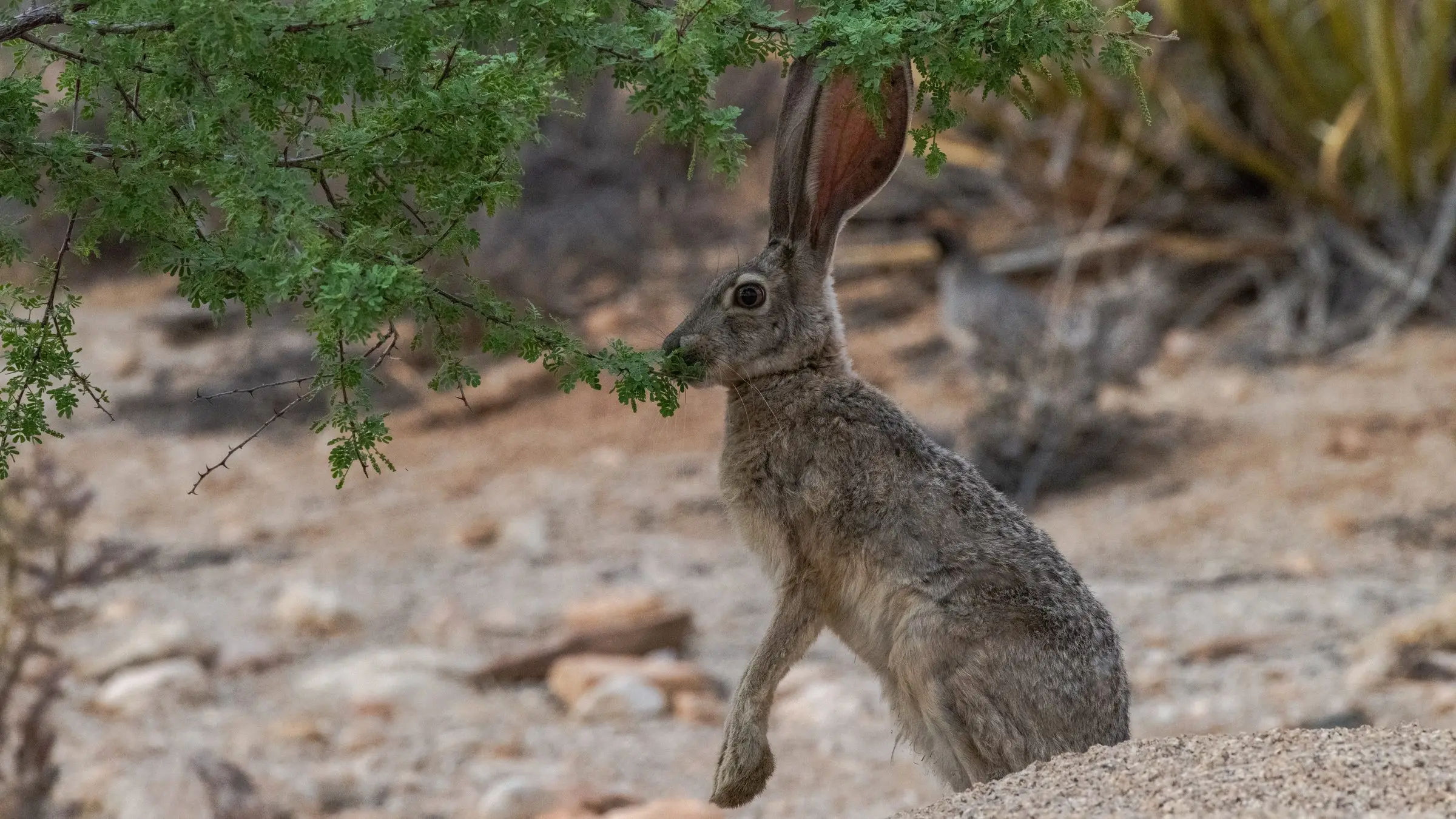
Ask what coyotes eat and you will be told rabbits. It is the first thing anybody says and it is the reason half the sounds on your caller are a rabbit in trouble.
Depending on where you are standing, that is either overwhelmingly true or substantially wrong, and the gap between those two is worth more to your scouting than any sound you will ever buy.
The Forest Service’s summary of the species puts the frame around it: about 90 percent of the diet is animal matter. The other ten percent is where a lot of the interesting behavior hides, and we will get to it.
The western answer, and why it is not the continental one
The number everybody quotes comes from a food-habits study across 17 western states, summarized in the Forest Service’s species review:
| Food | Share of diet |
|---|---|
| Lagomorphs, meaning rabbits and hares | 33% |
| Carrion | 25% |
| Rodents | 18% |
| Domestic livestock | 13.5% |
So rabbits lead, but they are a third of it. A quarter of what a western coyote eats it did not kill, and that single fact explains more blank stands than most hunters would like to admit. A coyote working a winter-killed deer is not hungry, and a dying rabbit played at him is a worse offer than the one he already has.
The seasonal split is just as useful. Winter runs on rabbits, hares and the carrion of large ungulates. Spring, summer and fall lean on small mammals, and the Forest Service names voles and mice specifically.
In sagebrush country the answer is almost embarrassing
Here is where the national average stops being useful.
“Coyote diets in sagebrush habitat of northeastern Utah and south-central Idaho consisted of about 75 percent black-tailed jackrabbits year-round.”
Three quarters, and not seasonally. Year-round. If you hunt the Great Basin, the folklore is not folklore. Jackrabbits are the food supply, and everything else is a rounding error.
Now put that next to a study from northeastern California, where meadow voles turned up in about half of all coyote scats analyzed, with mule deer and cattle behind them as probable carrion.
Same species, same region of the country, and one population is living on hares while another is living on rodents the size of your thumb.
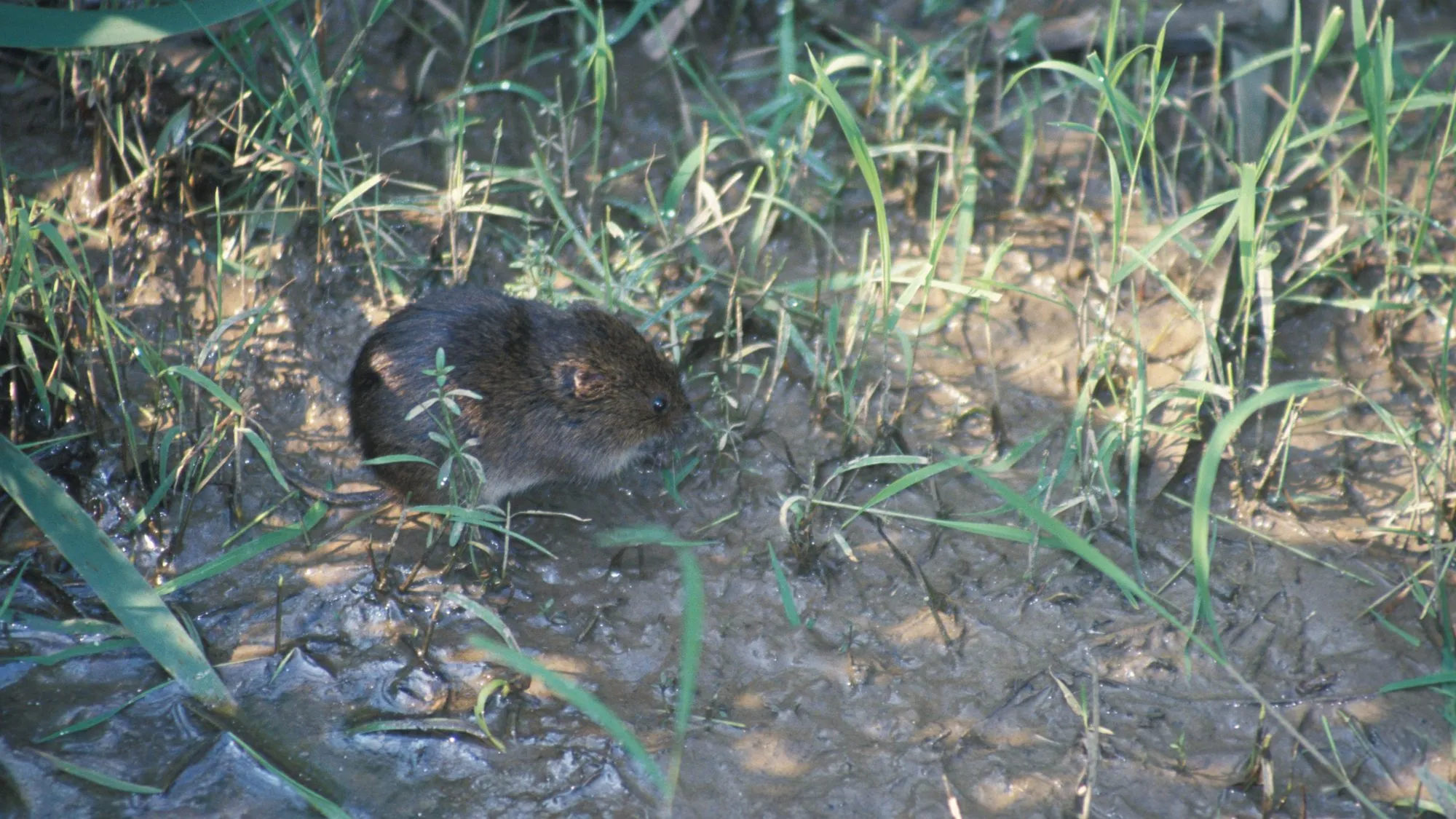
A meadow vole. In parts of northeastern California this animal turns up in half of all coyote scats. Photo by John J. Mosesso, USGS, public domain.
That is the finding that should change how you scout. There is no national answer to what coyotes eat. There is only what they are eating on the ground under your boots this month, and the way to know it is to look at what is out there rather than to trust the article.
Preferred is not the same as eaten
A 2023 review in the Journal of Mammalogy did something the scat studies cannot: it separated what coyotes eat from what they choose.
Counting records across the continent, rodents dominate at 3,498 to the lagomorphs’ 950. But when the same work measured selection against availability, lagomorphs came out significantly preferred and rodents came out largely avoided.
Read those two sentences together and you get the real picture. Coyotes eat an enormous number of rodents because rodents are everywhere, not because they want them. Given a choice, they take the rabbit.
The review also found coyotes are selective feeders rather than opportunists, with a predator-to-preferred-prey weight ratio of about 1:2. They hunt things around twice their own mass. That is why deer show up so high in the eastern studies and why a vole is a snack rather than a meal.
Selection shifts with latitude too. Mule deer and snowshoe hare are selected more strongly the further north you go, black-tailed jackrabbit more strongly toward the south.
So “target rabbits” is advice about what a coyote wants. It is not a description of what is in his stomach, and in some country the two are a long way apart.
Where you are changes the whole list
Here is the honest frame for everything above and everything that follows. A coyote in the Adirondacks and a coyote in the Mojave are the same animal eating almost entirely different things, and most writing about coyote prey quietly assumes one region and leaves everybody else out.
The best correction to that is a rangewide review published in Mammal Review in 2022 by Jensen, Marneweck, Kilgo and Jachowski. They pulled together 93 coyote diet studies from across North America and sorted them into eight Level I ecoregions, then asked what actually differs.
Their first result is the one that should keep everybody reading:
“At least 80% of coyote scats in every ecoregion contained small mammals, vegetation, lagomorphs or ungulates.”
Four categories, everywhere. What changes is the mix, and they set the Great Plains as the reference, so every other region is described as a difference from the middle of the continent. Percentages here are frequency of occurrence, meaning how often a food shows up in scat, not how much of it by weight.
| Your country | How it differs from the Great Plains |
|---|---|
| Northern forests, the Dakotas up into Canada | Small mammals +16%, lagomorphs +29%, ungulates +29% |
| Eastern temperate forests | Vegetation +14%, ungulates +26% |
| Northwestern forested mountains | Ungulates +19%, lagomorphs −12% |
| Marine west coast forests | Ungulates +18% |
| North American deserts | Lagomorphs +15%, ungulates −7% |
| Southern forests | Lagomorphs −12% |
| Great Plains | The baseline everything else is measured against |
Read down that column and the country sorts itself into three rough stories.
The deserts and the Great Basin run on rabbits. Lagomorphs 15 percent above the plains, ungulates below. This is the country most predator-calling content is written about, and part two takes it apart species by species.
The forests, east and north, run on deer. The authors put it plainly: coyotes “were generally more carnivorous in temperate forests than in other ecoregions, which seems to be largely driven by greater ungulate consumption in temperate forests.” Scat cannot tell you whether a deer was killed or found, and the authors are careful about it, writing that coyotes “seem to prioritize eating wild mammals, though more work is needed to quantify scavenging.” Either way, if you hunt Pennsylvania or Maine or Ontario, venison is a large share of what your coyotes are living on, and the gut pile is not a sideshow.
The East also eats a lot of plants. Vegetation is 14 percent above the plains there, which the authors attribute to “relatively high availability of wild fruits.” Persimmon, pokeberry, blackberry, wild grape, apples in an old orchard. Part one covered a western coyote full of juniper and prickly pear. The eastern version of that animal is full of fruit.
And the South is its own case. Lagomorph frequency runs 12 percent below the plains, so the rabbit is a smaller share of the diet than the rabbit-distress-first habit suggests. But in the southeastern states the authors measured mean ungulate frequency at 42 percent, “on a par with the northern forests ecoregion (where ungulate consumption was highest).” A southern coyote is eating deer at a northern rate.
Two other findings from the same review travel with you wherever you hunt. Larger coyotes ate larger food, and ungulate consumption rose with snow cover and with the presence of wolves, which is a carrion story. And in every season and every ecoregion, small mammals were “the most consistently eaten food items.” Mice hold the whole continent together, which is why nobody gets to skip the rodents.
The rest of this series follows that table. Part two is the dry West, part three is everything east of the Rockies and north of the plains, and part four puts them together on the ground.
The opportunist file
Selective does not mean fussy. Open enough scat and you find a list that reads like a forage guide.
I have pulled apart scat packed with grasshoppers, and others full of juniper berries, prickly pear fruit, and pine nuts. None of that is unusual. In Arizona grasslands with oak, juniper and ponderosa pine, the Forest Service records that coyote diets contained high percentages of plant material, with juniper berries particularly important and prickly pear fruit behind them.
There is a study in Mexico that took this further and counted the seeds. Coyote scats contained seeds in 27.9% of samples, manzanita and alligator juniper among them. The detail I like most: passing through a coyote reduced the viability of manzanita seed and improved germination in the juniper.
So the juniper is not just feeding him. He is planting it.
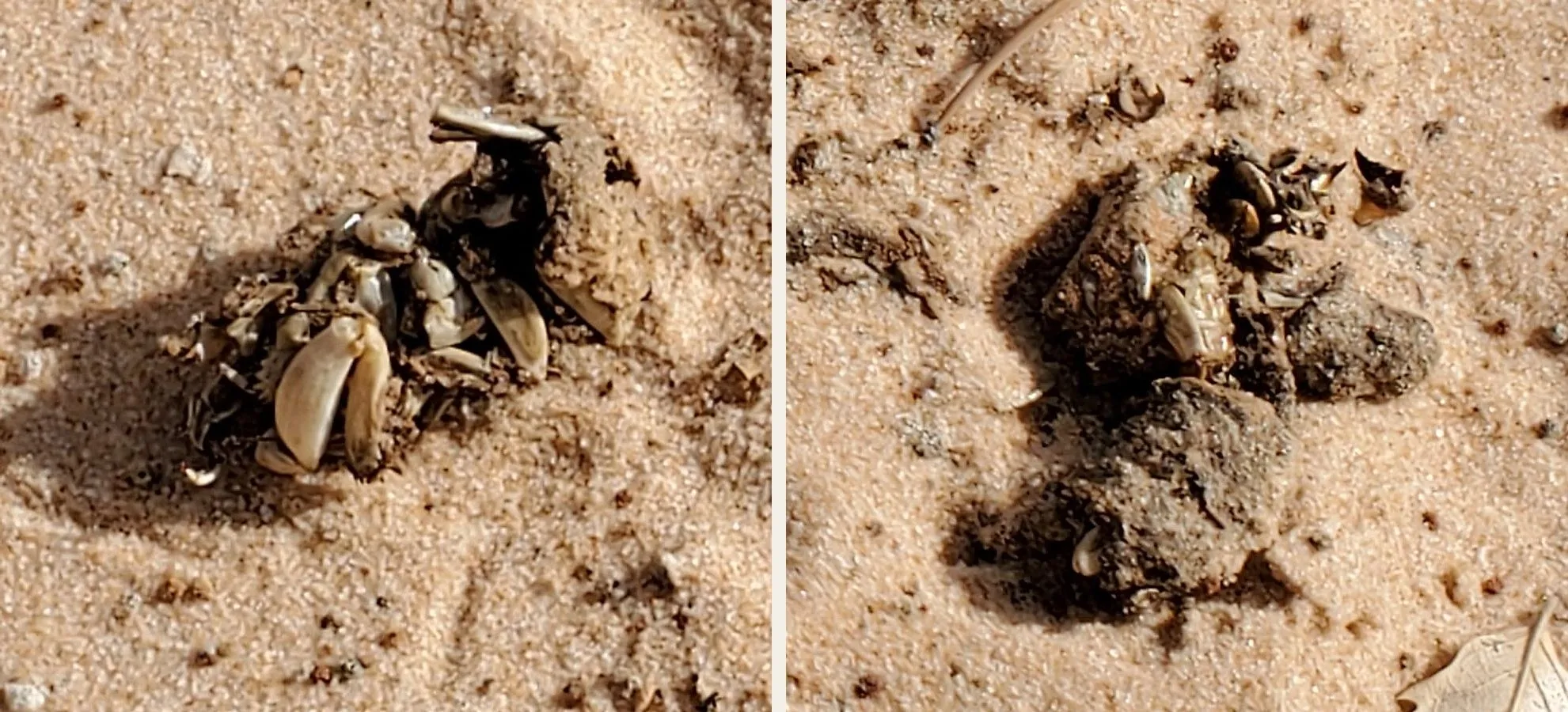
One photograph, cropped twice. The two piles lay about a foot apart, too far to show both and still see anything. The pale curved pieces are grasshopper legs and wing cases. This is a coyote that ate until he was full without chasing anything.
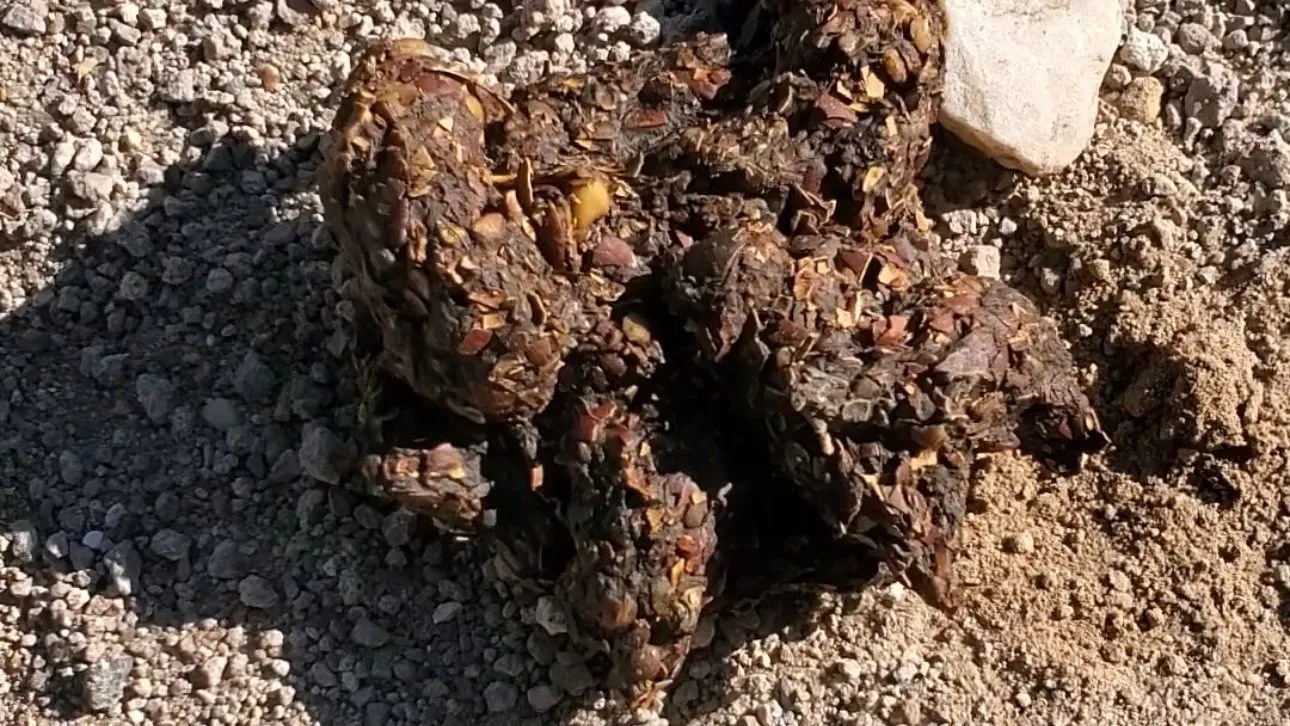
The pale flakes through this one are pine nut remnants. Nothing in it had to be caught.
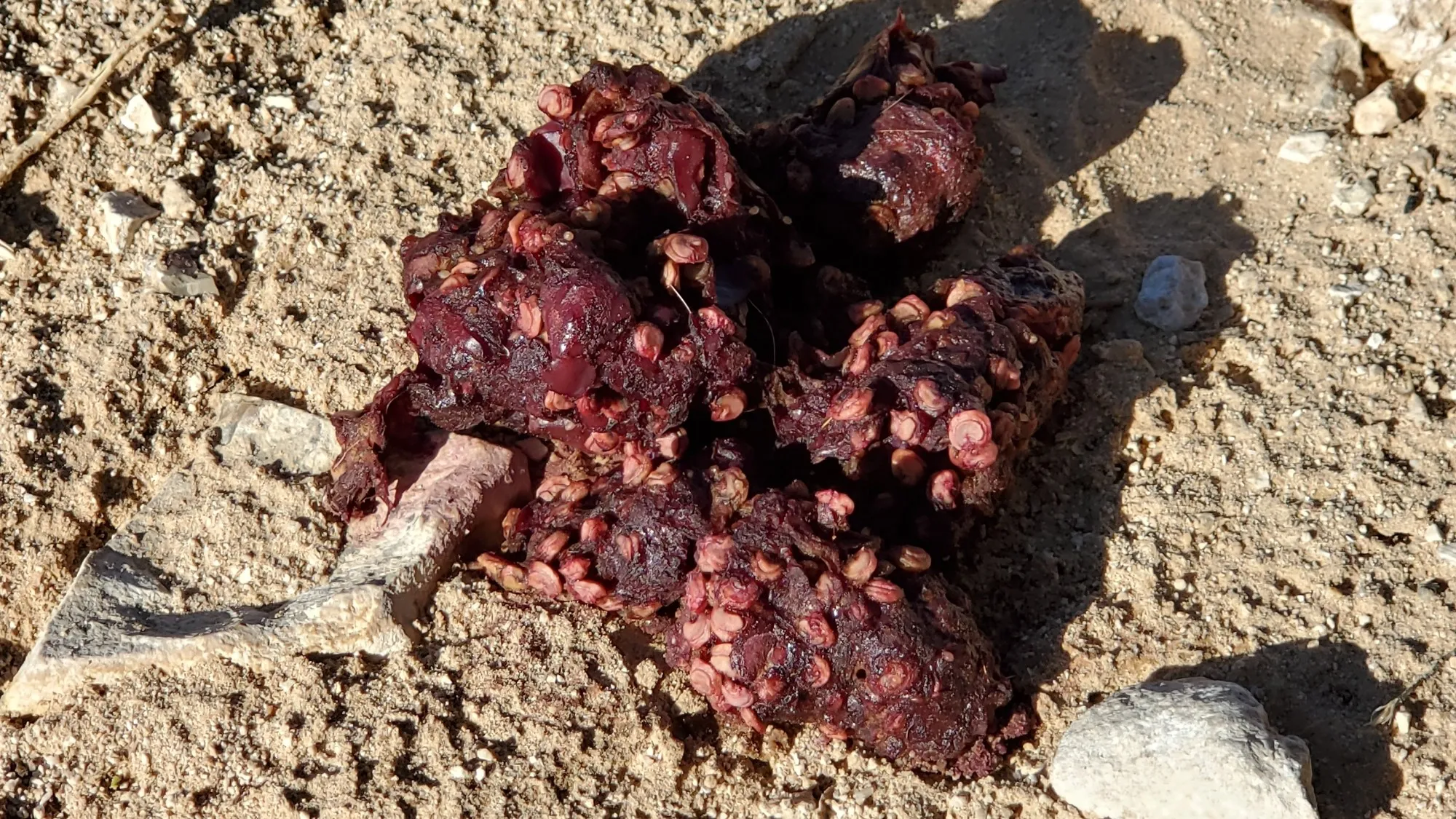
Prickly pear, and the color is the giveaway before you are close enough to pick out the seeds.
All three came off ground I hunt. None of them is a coyote that was going hungry, and none of them had to run anything down to eat.
- Insects — grasshoppers late summer into fall, when they are thick and slow and cost nothing to catch
- Fruit and mast — juniper berries, prickly pear tunas, pine nuts, and whatever else ripens in quantity
- Carrion — a quarter of the western diet, and the one that competes directly with your call
None of this makes a coyote a vegetarian. It makes him an animal that will not walk past free calories, which is the same trait you are exploiting when you play a dying rabbit at him.
Why any of this matters on a stand
Three things fall out of the numbers, and all three are things you can act on.
Know which food supply you are hunting. Sagebrush and jackrabbits is a different problem from meadows and voles, and both are a different problem from oak woods and deer. A big conspicuous prey animal a coyote crosses open ground to catch, a small one he mouses for in the grass, and a carcass he shares with every other scavenger in the county are three different animals to hunt, and they are three different day ranges.
Respect the carrion. A quarter of the western diet arrives dead, and in the eastern and northern forests the ungulate share is higher still. Find the gut piles and the winter kill and you have found where the coyotes are, and also the reason they might ignore you. This is the single most underrated thing on the list for anybody hunting deer country.
Watch the season turn. Grasshoppers and ripe fruit are a late-summer and fall subsidy everywhere, juniper and prickly pear in the West, persimmon and grape and old apples in the East. A coyote with a bellyful of juniper berries is not the same customer as the same coyote in February, and it is part of why the calendar changes what you should be playing and when you should be out.
The next part goes down a level, to what the western prey animals are themselves eating, because that is the part you can actually see from the truck. Browse lines and thatch are visible in February. Rabbits are not. Part three does the same for the East, the South and the north woods.
If you want the general approach to finding ground rather than the biology behind it, scouting for coyotes covers the walking-around version. And check the rules where you hunt before you act on any of it.